
Inverted Planetary Roller Screw vs. Ball Screw: Which is Better for High-Load Actuators?
A detailed engineering comparison between inverted planetary roller screws and traditional ball screws for heavy-duty and compact robotic applications.
When designing high-load electro-mechanical actuators, engineers constantly face a critical choice: Should I use a traditional ball screw or upgrade to an inverted planetary roller screw?
While ball screws have been the industry standard for decades due to their cost-effectiveness and ease of sourcing, the rise of compact robotics, aerospace actuators, and heavy-duty servo presses has pushed the limits of what ball screws can physically handle.
In this deep-dive guide, we break down the engineering differences, load capacities, failure modes, and lifespan characteristics of both technologies to help you make the mathematically and structurally correct choice for your next OEM project.
1. Contact Mechanics: Point vs. Line Contact
The fundamental difference between a ball screw and a planetary roller screw lies in how the load is transferred from the nut to the threaded shaft.
- Ball Screws utilize spherical ball bearings recirculating through a return tube. This geometry creates a point contact between the ball and the thread groove. Under extreme loads, point contacts experience massive Hertzian stress concentration.
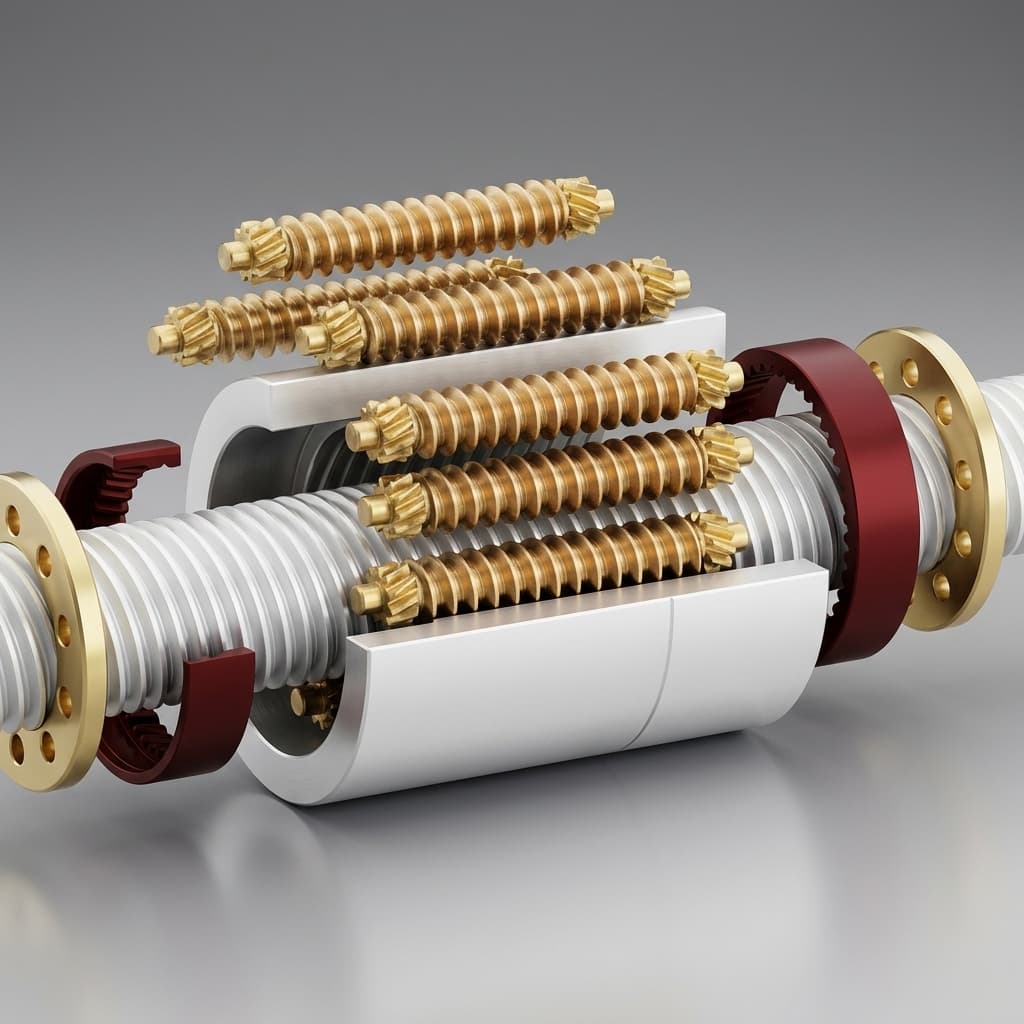
- Planetary Roller Screws utilize threaded cylindrical rollers that orbit the shaft like planets around a sun gear. This creates a line contact (or technically, a massive increase in the number of concurrent contact points). The load is distributed across a significantly larger surface area.
Visualizing the Load Distribution
Imagine pressing a marble into your hand versus pressing a flat cylinder. The marble will dig in painfully (point contact), while the cylinder distributes the pressure (line contact). In a linear actuator, this increased contact area translates directly to superior shock resistance and load capacity.
2. Dynamic Load Capacity and the $L_10$ Life Calculation
Because of the line contact mechanics, an inverted planetary roller screw can handle dynamic loads ($C_a$) that are 2 to 3 times higher than a ball screw of the exact same diameter.
However, the real magic happens when you look at the service life. The expected service life (commonly referred to as L10 life, expressed in millions of revolutions) is governed by the cubic relationship to load capacity:
L10 = (Ca / Fm)³ × 10⁶ revolutions
Where:
- Ca = Dynamic Load Rating
- Fm = Equivalent Mean Axial Load
Because the relationship is cubic, if a roller screw has a dynamic load capacity that is exactly twice that of a comparably sized ball screw, its theoretical service life under the same load (Fm) is 2³ = 8 times longer. In high-stress applications like injection molding or automotive stamping, a roller screw routinely outlasts a ball screw by 10 to 15 times.
3. Speed, Acceleration, and Recirculation Limits
Ball screws are mechanically limited by the speed at which the balls can recirculate through the return tubes. Exceeding the critical "DN value" (Diameter $\times$ RPM) can cause noise, heat, return-path damage, ball skidding, or sudden service failure.
Inverted roller screws do not recirculate. The planetary rollers are held in a synchronized cage and continuously roll around the shaft without ever leaving their tracks. This non-recirculating design allows for:
- Dramatically higher rotational speeds (up to 5000+ RPM).
- Rapid, violent accelerations.
- A significant reduction in vibration and acoustic noise.
4. Compactness and The "Inverted" Advantage
Traditional roller screws still require a distinct nut assembly attached to a moving carriage. The Inverted Planetary Roller Screw completely flips this architecture:
- The planetary rollers travel inside a long, internally threaded nut.
- The thread on the central shaft is relatively short.
- Most importantly: The outer body of the nut itself can be integrated directly as the armature/rotor of the servo motor.
This can reduce or simplify external couplings, thrust-bearing packaging, and separate motor mounts when the whole actuator is designed around the inverted layout. For humanoid robot designers fighting for every millimeter of space in knee and ankle joints, that architecture can be decisive.
The actual envelope reduction must be checked at actuator level. Bearings, encoder clearance, seals, anti-rotation features, housing wall thickness, and the push-tube interface can consume part of the theoretical length saving.
5. RFQ Decision Matrix: Which Data Changes the Answer?
| Buyer Input | Why It Matters | Ball Screw Bias | Inverted Roller Screw Bias |
|---|---|---|---|
| Peak and equivalent mean load | Determines fatigue life and size | Lower to medium load | High load or shock load |
| Axial package length | Controls actuator architecture | Open machine axis | Compact robot joint or EMA tube |
| Duty cycle and heat | Sets lubricant and preload risk | Moderate cycles | High cycles with thermal review |
| Backlash or preload target | Affects reversal accuracy and friction | Moderate precision | Low backlash under high load |
| Inspection package | Impacts supplier approval | Basic dimensional report | Lead, preload, torque, hardness, CoC |
| Prototype quantity | Affects process route and cost | Catalog or semi-custom | Custom matched-set validation |
6. Summary Matrix: Which Should You Choose?
| Feature / Metric | Standard Ball Screw | Inverted Roller Screw |
|---|---|---|
| Contact Type | Point Contact | Line Contact / Multi-Point |
| Relative Load Capacity | 1x (Baseline) | 2x - 3x |
| Relative Service Life | 1x (Baseline) | 8x - 15x |
| Max Rotational Speed | Moderate (Recirculation limit) | Ultra-High (No recirculation) |
| Shock Load Resistance | Poor (Prone to pitting/brinelling) | Excellent |
| Integration Envelope | Long (Requires couplings) | Extremely Compact |
| Relative Cost | Low | High |
Final Verdict
Choose a Ball Screw if:
- Your application involves light to medium loads without sudden shock impacts.
- Budget constraints are the primary driving factor.
- Axial length and packaging volume are not strictly constrained.
Choose an Inverted Planetary Roller Screw if:
- You are designing bipedal humanoid robot joints, dexterous hands, or aerospace EMA (Electromechanical Actuators).
- You need to replace a hydraulic cylinder with a clean electromechanical equivalent capable of high thrust force.
- You have severe space constraints and must integrate the rotor directly onto the screw mechanism.
Ready to upgrade your linear motion system? Contact our engineering team for a comprehensive DFM review, 3D CAD models, and custom sizing recommendations.
Ready to Upgrade?
Whether you need a Standard Planetary Roller Screw for a heavy-duty press or an Inverted Roller Screw for a compact robot joint, our application engineers can help you seamlessly transition away from ball screws.
Author

Categories
More Posts
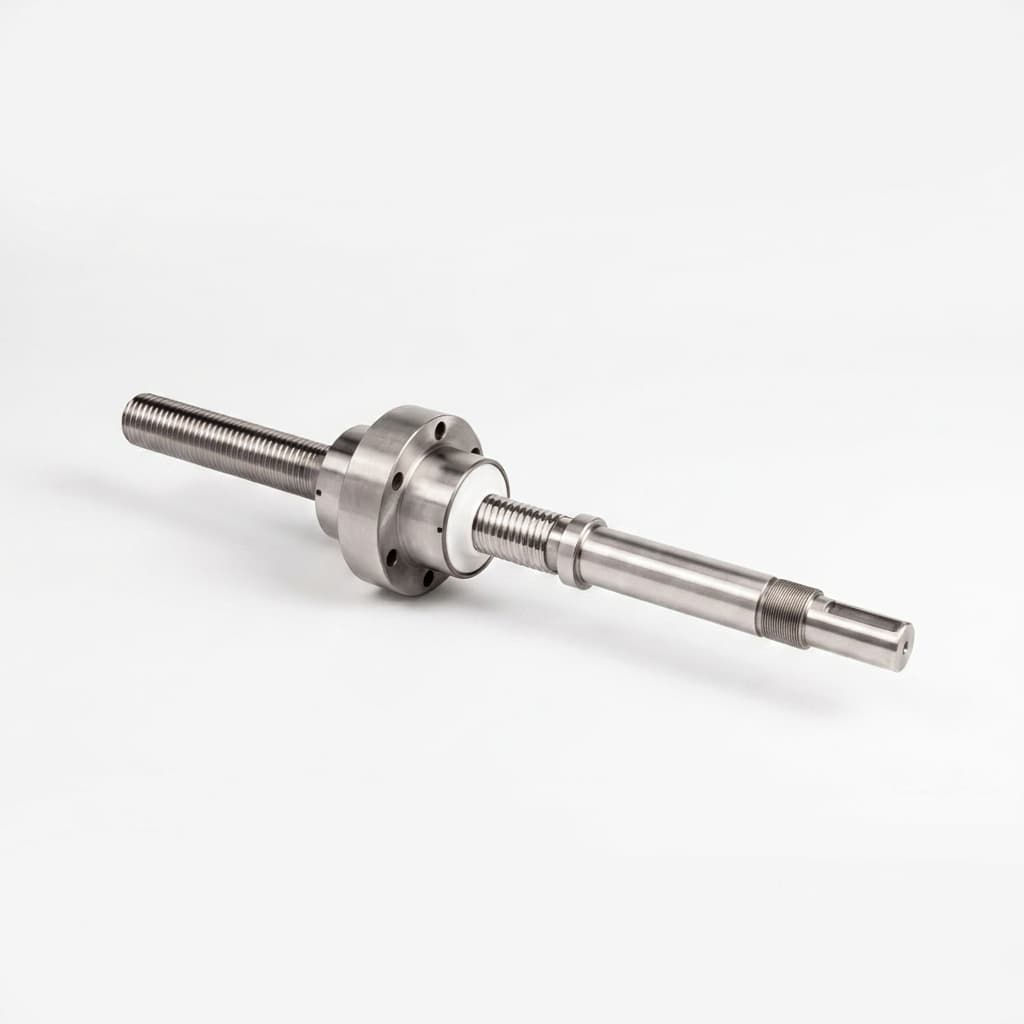
Replacing Hydraulic Cylinders with Inverted Roller Screws: A Total Cost of Ownership (TCO) Analysis
Use this TCO guide to compare hydraulic cylinders with inverted roller screws across energy, maintenance, ESG risk, precision, and migration limits.
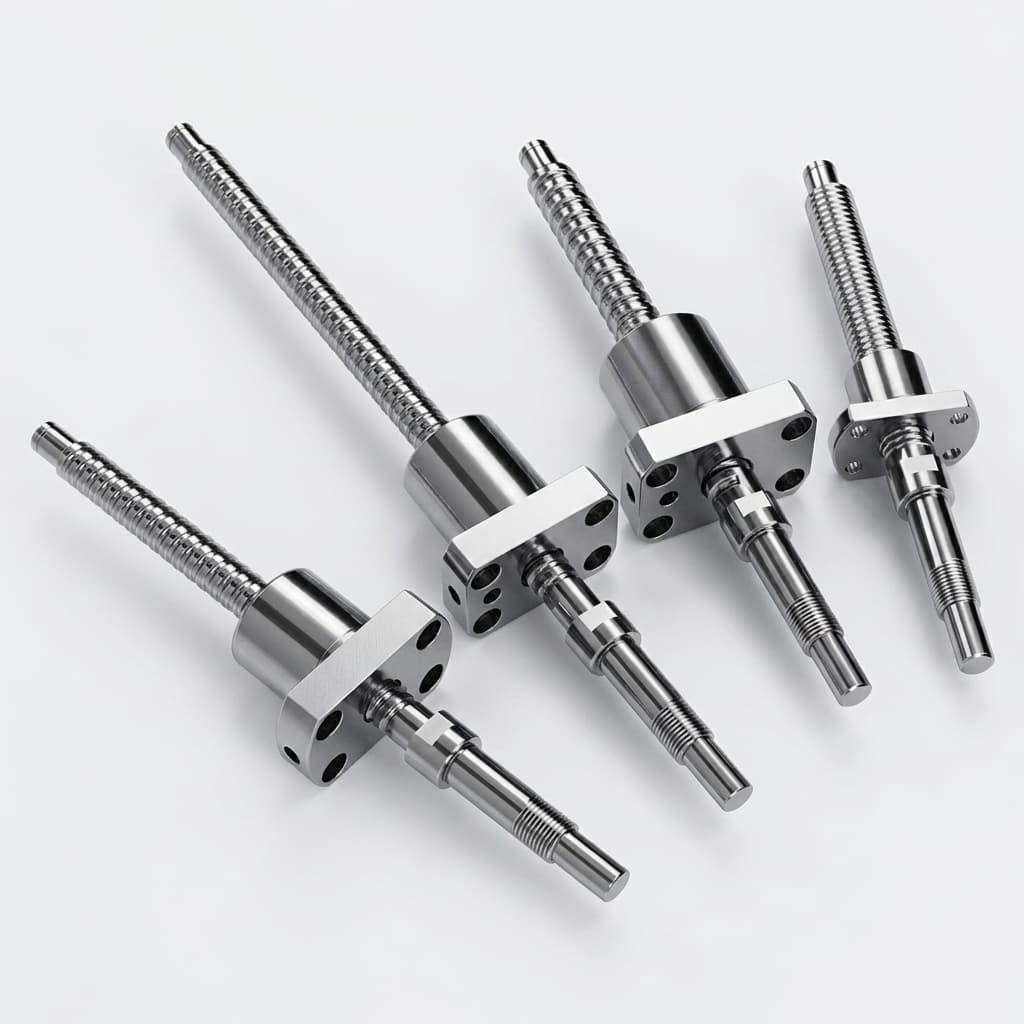
Inverted Roller Screw Supplier Selection: 5 Quality Control Metrics Procurement Must Check
A comprehensive supplier audit checklist for procurement teams and engineers evaluating inverted roller screw manufacturers, covering ISO standards and metrology.
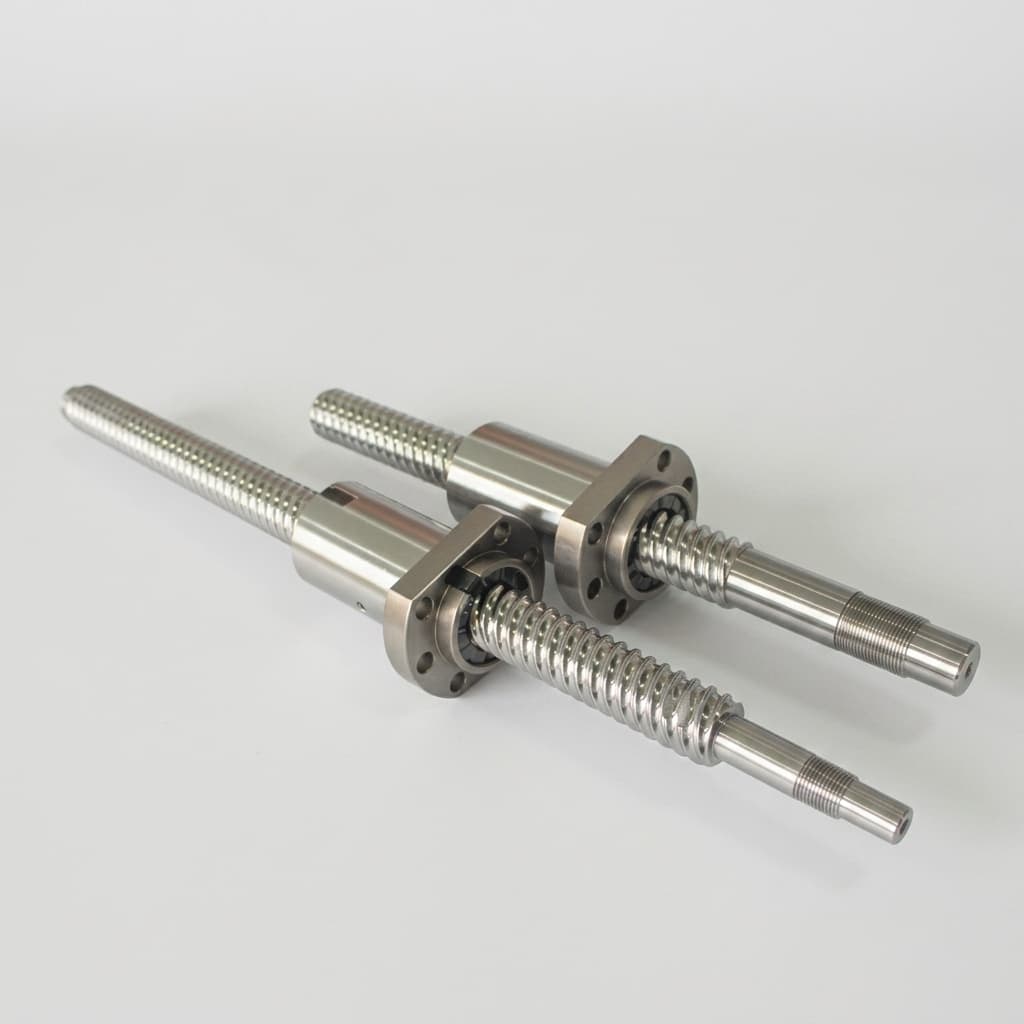
Integrating Inverted Roller Screws with Frameless Hollow-Shaft Motors: Direct-Drive Actuator Engineering, Thermal Management, and Procurement Guide
Integrate inverted roller screws with frameless hollow-shaft motors. Compare thermal paths, bearing interfaces and sourcing options, then prepare your OEM RFQ.